
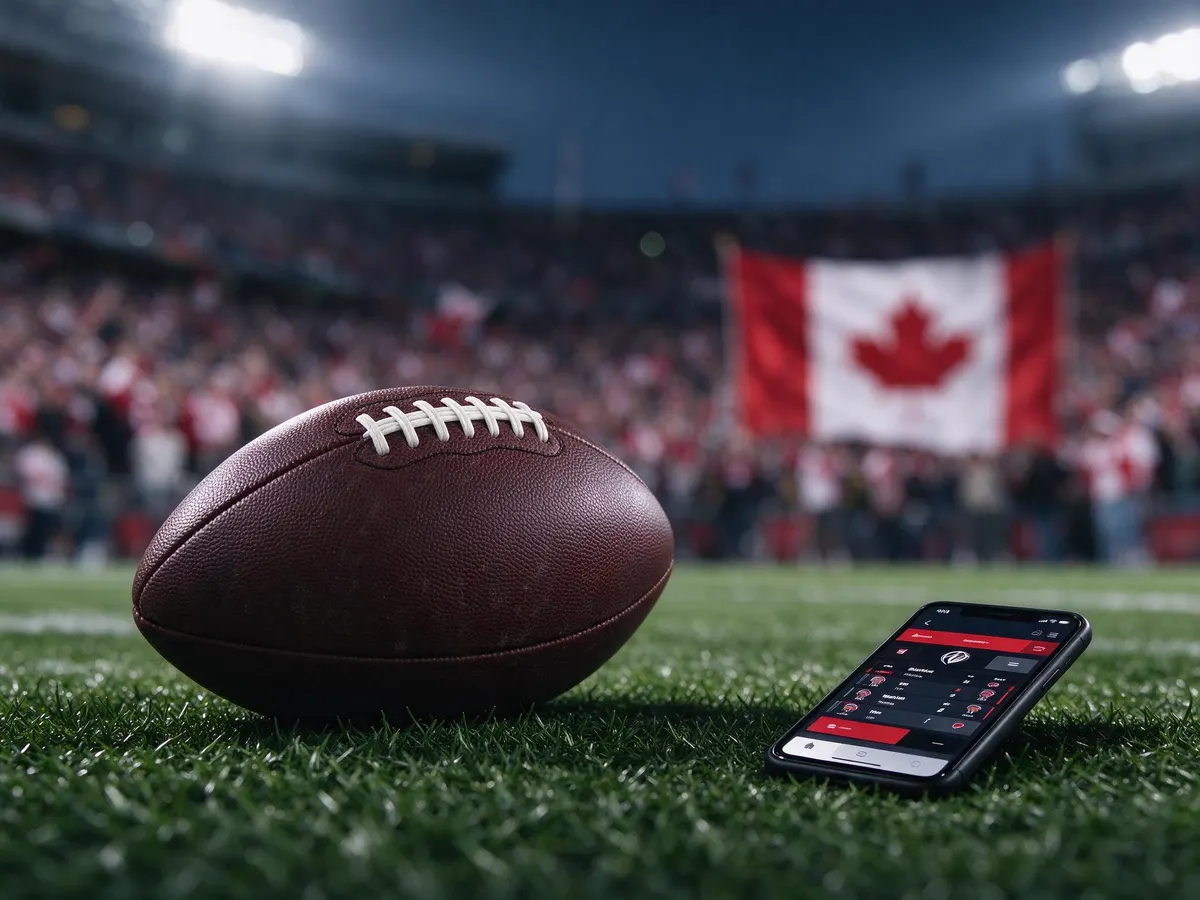
Let’s kill the myth first: an “official betting partner” does not get better odds, faster data or inside information. Nothing in the theScore Bet NFL partnership gives PENN Entertainment a pricing edge over the sportsbook sitting next to it in the Ontario app store. What it buys is permission — the legal right to put a shield logo, a Super Bowl word mark and NFL Kickoff branding on marketing material that competitors have to describe in vague euphemisms. That’s valuable. It’s just not what most people assume.
Which makes this deal a useful teaching case. Strip away the press release language and you can see exactly what leagues sell, what operators actually buy, and where the real competitive advantage sits.
So what’s actually in the theScore Bet NFL partnership?
PENN Entertainment’s theScore Bet has signed a multi-year agreement with the NFL covering Canada, for both sportsbook and iCasino operations. The headline asset is intellectual property: official NFL trademarks, league logos, team marks, NFL Kickoff branding and the Super Bowl.
That licence extends across PENN’s Canadian brands — theScore Bet, theScore Casino and Hollywood Casino — so campaigns can be built around the league’s tentpole moments: Kickoff, the NFL Draft, the postseason and the Super Bowl. The stated logic is calendar coverage. As Justin Hergianto, vice president of marketing at PENN Interactive, put it, the NFL “has an incredibly passionate following in Canada,” and the partnership gives the company “new ways to serve those fans throughout the football season.” Draft week in April is a marketing opportunity; without a licence, you can’t really use it.
Beyond the marks, the agreement opens access to NFL marketing, advertising, hospitality and fan engagement assets, plus media and promotional inventory exchanges across NFL and theScore-owned digital channels. There’s also NFL Canada digital media access, database marketing opportunities and custom fan experiences. Gavin Kemp, general manager of NFL Canada, framed it as a shared commitment to “delivering exciting new ways for Canadians to engage with the NFL.”
Read that list again and notice what isn’t on it: no exclusive data feed, no exclusive betting market, no guarantee of anything to do with pricing.
What does “official betting partner” mean in practice?
It means a commercial licence plus a public endorsement, inside a defined territory and category. The territory here is Canada. The category is sportsbook and online casino. Outside those boundaries, the designation does nothing.
A regular sponsorship might buy you signage and a hashtag. Official partner status is deeper: approved use of protected marks, inclusion in the league’s own media inventory, access to hospitality and fan data programmes, and — crucially — a vetting process. Leagues do not hand their logo to an operator that isn’t licensed by the relevant regulator. In that sense the badge functions as a trust signal, which is precisely why operators pay for it.
Data and odds: the part people get wrong
Official real-time league data is a separate commercial product, licensed through dedicated data rights agreements rather than bundled into every marketing partnership. Multiple sportsbooks buy from the same suppliers. The NFL’s play-by-play feed is not an exclusive weapon handed to one brand in one country.
Odds are set by traders and pricing models, shaded by the operator’s own risk appetite and liability. A logo licence doesn’t touch any of that. If an official partner’s NFL prices look sharper, it’s because their pricing team or their data supplier is better, not because of the badge.
Marketing and branding rights: the part that’s real
Here the advantage is genuine. Being able to say “official partner” and show the league’s marks in an ad changes conversion rates, because recognition and perceived legitimacy drive sign-ups in crowded markets. It also unlocks content: branded Super Bowl promotions, Draft-week campaigns, co-created media across theScore’s app and NFL Canada’s channels.
The table below separates what these deals typically include from what people assume they include.
| Right | What it actually grants | In this deal, as announced |
|---|---|---|
| League and team marks | Approved use of logos and trademarks in marketing | Yes |
| Event branding | Campaigns tied to Kickoff, the Draft, Super Bowl | Yes |
| Media and promo inventory | Ad space swaps across league and operator channels | Yes |
| Hospitality and fan experiences | Tickets, events, custom activations for customers | Yes |
| Database marketing | Access to league audience marketing programmes | Yes |
| Official real-time data feed | Licensed separately by leagues to data distributors | Not described as part of it |
| Exclusive odds or better pricing | Nothing — odds are set by each operator | No |
How do sportsbook-league deals work financially?
Neither side discloses the numbers, and I won’t guess at them. But the structure of these agreements is well understood across the industry.
The operator pays a rights fee, usually annual and multi-year, sometimes with escalators tied to term length or category exclusivity. On top of the cash there’s almost always value-in-kind: the operator commits its own media inventory, app placements and marketing spend to promoting the league. That’s what “media and promotional inventory exchanges” means in the announcement — both sides are giving up advertising real estate, not just money.
Pure revenue sharing on betting turnover is rare in these marketing partnerships, and in several jurisdictions regulators are uncomfortable with it, because a league earning a cut of wagers on its own games creates an obvious conflict. Fixed fees plus performance-based marketing bonuses are the cleaner model, and the one most deals land on.
Exclusive content and promotions are where the money becomes visible to customers: licensed Super Bowl campaigns, odds-boost promotions wrapped in official branding, free-to-play prediction games using team marks, Draft-night content in theScore’s media app. None of it changes the underlying mathematics of a bet. Every wager still carries the operator’s margin, and that margin is how the business makes money regardless of whose logo is on the banner.
Why does the NFL want this beyond the cheque?
Three reasons, and revenue is only the first.
Engagement is the second. A fan with money on a game watches longer, checks the app more often and cares about a blowout in the fourth quarter. Leagues have been explicit for years that betting interest extends viewing time, and the NFL’s push into Canada depends on building habitual attention in a market where hockey owns the calendar.
Control is the third, and the most underrated. By licensing official partners, a league decides who gets to associate with its brand — and quietly pushes grey-market and unlicensed operators further to the margins. Partnership agreements come with integrity obligations: information sharing on suspicious betting patterns, restrictions on certain market types, advertising standards. A league that signs nobody still gets bet on; a league that signs vetted partners gets a say.
Why does Canada make this deal significant?
Because Canada’s regulated market is young and the land grab is still on. Single-event sports betting only became legal nationally in 2021, Ontario’s competitive online market opened in 2022, and Alberta’s commercial market launched in July. theScore Bet, theScore Casino and Hollywood Casino are licensed in both provinces.
PENN’s structural advantage is the media side. theScore is a daily destination for millions of Canadian sports fans — Hergianto pointed to exactly that, saying the company can “connect sports media and betting with the NFL experiences fans care about.” Owning the app where fans check scores and the sportsbook where some of them bet is a funnel competitors have to buy their way into. An NFL licence makes that funnel look more official.
Context matters on the advertising side too. Ontario’s regulator has tightened gambling marketing rules, including restrictions on using athletes in ads. When you can’t put a star quarterback in a commercial, league marks and event branding become one of the few powerful, compliant assets left. That’s part of why this licence is worth real money in Canada specifically. theScore Bet already holds a CFL deal; the NFL agreement widens the football footprint rather than replacing it.
What this signals for the rest of the industry
Expect more of these, narrower and more territorial. Global leagues are slicing rights by country and by category, which lets them sign a different official partner in Canada than in the United States or the United Kingdom. For operators, that means the badge is becoming table stakes in mature markets rather than a differentiator — once three competitors hold league licences, nobody’s logo wall wins the argument.
The useful takeaway for anyone studying the mechanics, including readers in India watching cricket’s sponsorship economy under a very different legal framework, is that these deals are media and trust transactions dressed as sports partnerships. They move attention and legitimacy. They don’t move the odds.
And the consumer point follows from that: an official league badge tells you an operator is licensed and well funded. It tells you nothing about pricing, payout speed or whether a bet is worth making. Every sportsbook builds in a margin, outcomes stay random, and anyone choosing to bet should treat it as paid entertainment with firm deposit and time limits — never as income.