

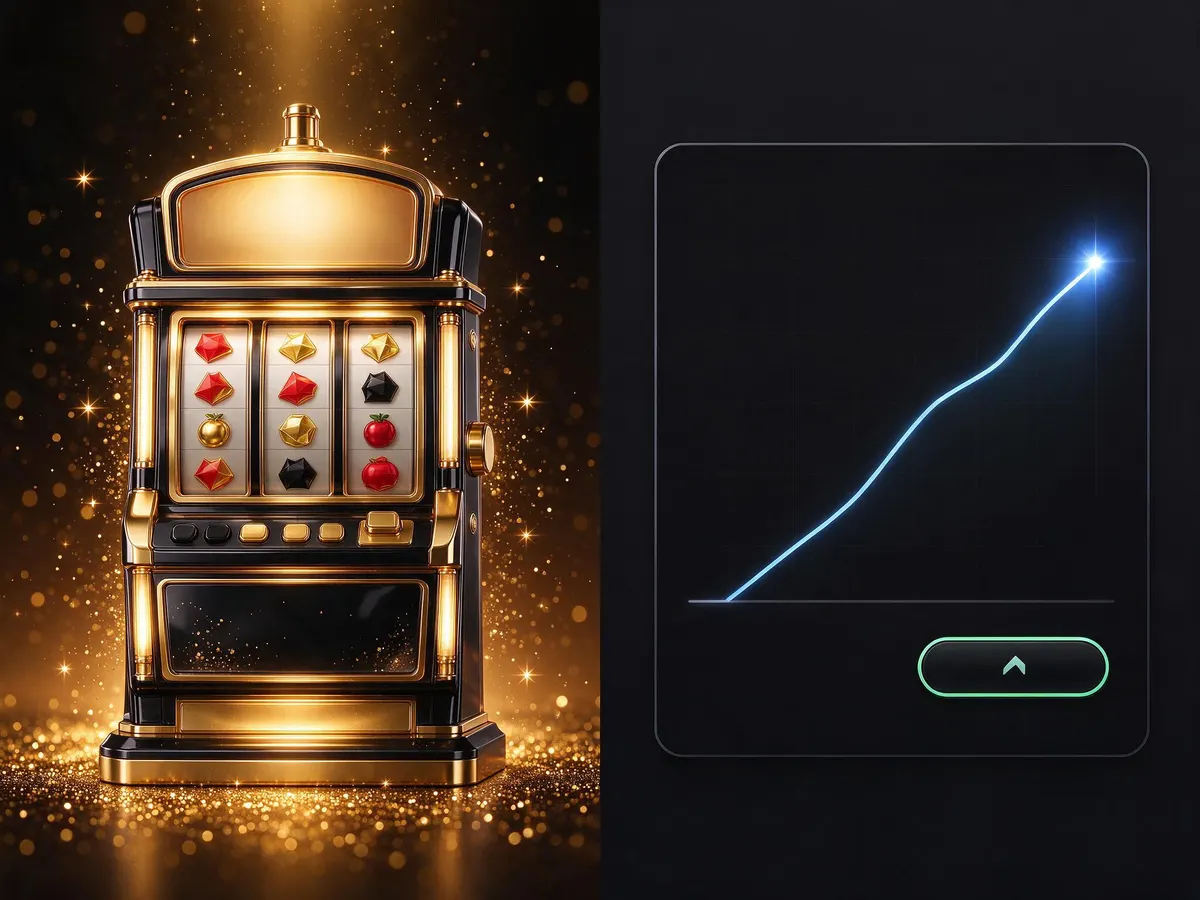
Two games, one Tuesday: which one would you back?
You have two titles going live in your lobby on the same Tuesday. One cost a fortune in art: cinematic intro, licensed-sounding soundtrack, reels that bloom when a wild lands. The other is almost plain by comparison, a line climbing a grid, a multiplier counting up, one big cash-out button. Which one is still earning you revenue in February?
If you have run a lobby for more than a season, you already know the uncomfortable answer, and it tells you a lot about what makes a casino game successful now. Visuals get the install, the click, the first spin. Mechanics decide whether there is a second week. Levan Kavtaradze, Head of Partner Management at Galaxsys, put the shift bluntly in an interview published ahead of SBC Summit Lisbon: “Simply launching another game or having nice-looking visuals is no longer enough.”
Let’s follow those two Tuesday releases through ninety days and pull the lessons out as we go.
The visual-first era is over
Week one belongs to the beautiful slot. It takes the hero banner, it gets the push notification, and your first-session numbers look great. Curiosity is cheap to buy. A strong thumbnail and a trailer will always move players through the door.
Week three is where the story changes. The art has been seen. The intro gets skipped. Nothing about the maths or the pacing gives a player a reason to open the game again rather than one of the hundred other polished releases that shipped that month. That is the market condition driving current iGaming trends: supply is enormous, visual quality is table stakes, and differentiation has moved somewhere less glamorous.
Think about what a player actually learns in their first ten rounds. Not the colour palette. They learn how often something happens, how long a dry patch feels, whether the rules were clear enough to understand without reading a help file, and whether they trust the outcome. Those are mechanics questions. Graphics are the wrapper; the loop is the product.
Galaxsys is a useful example precisely because its showcase lineup leans on mechanics rather than spectacle. Titles like Instawin, BeeInfinity, Tower Rush and Olympian Legends are built around fast, legible loops you can grasp in seconds. The lesson for a studio is not “spend less on art.” It is that art has stopped being the thing players choose between.
What actually drives player retention today
Back to your two games at day thirty. The slot’s retention curve has flattened into a thin line of habit players. The simpler title is still pulling returning sessions. Why? Four things are doing the work, and none of them are visual.
Game mechanics that keep players coming back
Game stickiness comes from the shape of a session, not the shape of a symbol. A few specifics that matter more than most operators credit:
- Round length. A crash round lasting a handful of seconds gives a player twenty decisions in the time a feature-heavy slot gives them one. More decisions means more agency, and agency is what players report enjoying.
- Volatility that matches the audience. High volatility means rarer, larger wins; low volatility means smaller, more frequent ones. Neither changes RTP. Pick the wrong one for your player base and your bonus-funded cohort churns before they ever reach a feature.
- Hit frequency, stated honestly. How often a game pays anything at all shapes how a session feels. A game can have a strong RTP and still feel punishing if the dry stretches are long and unsignposted.
- Player-controlled outcomes. Cash-out timing, auto cash-out thresholds, adjustable risk levels. These do not beat the house edge, and no setting ever will, but they give the player something to do beyond pressing spin.
- Legible rules. If a new player cannot explain the game to a friend in one sentence, your acquisition funnel leaks at the tutorial.
Transparency and fairness as retention tools
Here is the part that still gets treated as compliance overhead rather than product. Transparency retains players.
Publish RTP where the player can find it, and be straight about what it means: 96% RTP is a long-run average across millions of rounds, which is the same thing as saying the house edge is 4%. It is not a session forecast and never a promise. Players who understand that stay longer than players who feel tricked when a session goes badly, because their expectations were never inflated in the first place.
Provably fair systems take this further. Using server and client seeds with published hashes, a player can verify after the fact that a round’s outcome was not manipulated. Crash games popularised the approach, and it has quietly become one of the strongest trust signals in the category. An RNG certificate in a footer is an assurance; a hash a player can check themselves is proof.
Add the social layer and the picture completes. Shared round timers, visible bets, live cash-out feeds, leaderboards and tournaments turn a solitary game into something that feels populated. That is cheap engagement compared with another art pass.
One caution, said plainly: engagement mechanics and harm mechanics use the same levers. Fast rounds and visible leaderboards cut both ways. Any studio or operator leaning on them should ship deposit and loss limits, session reminders, reality checks and easy cool-off tools alongside, and should treat a player chasing losses at 3am as a problem to interrupt rather than a cohort to optimise.
Why crash games lead this evolution
Your simple Tuesday release was a crash game, and that is not a coincidence. Crash game design is the cleanest proof that mechanics outrank visuals, because the genre has almost no visuals to hide behind.
Strip a crash game to parts and you get: a multiplier rising from 1.00×, a random crash point, and a decision about when to cash out. That is it. No reels, no cascading symbols, no cinematic bonus trigger. And yet the loop holds attention because every element is doing a job. The rising number creates tension. The cash-out button creates agency. The short round means the next decision is always seconds away. The shared round means you are watching other people make the same call.
Galaxsys built its reputation in this space, and its lineup shows the pattern repeating across formats, taking the fast-round, clear-decision structure and dressing it differently rather than burying it under production value.
Be honest with players about the maths while you are at it. Cashing out at 2.00× does not change the house edge, and auto cash-out is a convenience feature, not a strategy. No betting pattern turns a negative-expectation game positive. Studios that explain this clearly lose nothing and gain the kind of player who does not quit in anger.
The new success formula for casino games
Ninety days in, the scoreboard from our two releases points at a usable checklist. When you are reviewing the next pitch, swap the visual-first instinct for the mechanics-first question.
| Decision point | Visual-first instinct | Mechanics-first question |
|---|---|---|
| First impression | Does the trailer look premium? | Can a new player understand the rules in one sentence? |
| Session design | How impressive is the bonus animation? | How many decisions does a player make per minute? |
| Maths | What RTP will pass certification? | Does the volatility and hit frequency fit this audience? |
| Trust | Is the licence logo in the footer? | Can the player verify a round themselves? |
| Retention | What is the day-one install number? | What does day-thirty return rate look like, and why? |
| Safety | Are the RG links present? | Do limits, reminders and cool-off tools work inside the game? |
Nothing here argues for ugly games. Good art still earns the first click, and a sloppy interface will sink a strong loop. The point is sequence. Build the loop, balance the maths, make the fairness checkable, give players something social to sit inside, then dress it. Studios that do it in the other order keep shipping handsome games that nobody opens twice, which is exactly the trap Kavtaradze was describing.
The simplest test of a release is the one your players run without being asked. On day thirty, with the novelty gone and the art fully seen, is there still a reason to open it? If the only answer you have is “it looks great,” you already know how February goes.
FAQ
What drives player retention in casino games?
Session structure and trust, mainly. Short rounds with real player decisions, volatility and hit frequency matched to the audience, rules a newcomer can grasp immediately, verifiable fairness, and social features that make the game feel populated. Visual quality drives acquisition far more than retention.
Why do visuals matter less in modern casino games?
Because high production value is no longer scarce. With a crowded release calendar and strong art across the board, graphics stopped being a differentiator and became an entry requirement. Players choose between loops, maths and trust once the novelty wears off.
How do game mechanics affect player engagement?
Mechanics control pacing and agency. A game that gives a player a meaningful decision every few seconds, such as a cash-out call in a crash round, feels participatory, while a long-cycle game can feel like watching. Mechanics also set how losing streaks feel, which drives whether a player returns, though they never change the built-in house edge.
Gambling always carries a house edge and no game, setting or system changes that. Play only with money you can afford to lose, use deposit and session limits, and seek support from a recognised problem-gambling service if it stops being entertainment. 18+.